It is Thursday, April 30, 2026. You likely saw the news headlines over your morning coffee.
Another legacy tech giant just replaced a swath of its middle management with AI. Meta (Facebook) is cutting staff. Microsoft is cutting staff too. Both are doing it while simultaneously announcing record AI investment numbers in the same press release — as if the contradiction needs no explanation. And it doesn’t, because the math is simple and the message is clear: the companies that built the internet economy have decided that a significant portion of the human labour required to run it is now optional.
The AI white-collar winter didn’t just quietly arrive. It kicked the door off its hinges and isn’t apologetic.
If you have ever watched Game of Thrones, you know the precise feeling sitting in the collective consciousness right now. The Wall has fallen. The algorithmic White Walkers are pouring through the breach, and comfortable, predictable, soul-trading 9-to-5 jobs are the first casualties. The castles that people spent four years in college and university building — the qualifications, the career ladder, the promise that if you performed well a job would take care of you — those castles are on fire. And the people inside them are running for their lives.
Running where?
To the only frontier left where being human still determines the outcome. To the one arena where AI cannot fire you because you work for yourself. To the thing that has always been the last refuge of the ambitious, the displaced, and the desperately self-reliant.
They are turning to entrepreneurship.
And this is where I want to talk to you directly. Not to the crowd reading this for entertainment. To you — the specific person who has an ambition that feels slightly embarrassing in polite company. You want to build something significant. Not a lifestyle business, not a side hustle, not something you apologise for at dinner parties. Something real. Something your continent will eventually acknowledge. Something that competes with the biggest brands in the world and wins. Something that lands you on a list that currently has none of your people on it.
You are David. The sling is in your hand. The giant has not felt you yet.
The problem is not ambition. The problem is the fog. Like the kind of fog that smothers London. You have the fire but not always the map. You are moving but not always sure whether you are moving toward the thing or away from it. And so, like every serious entrepreneur who has ever existed — from the traders on the Silk Road to the builders in Silicon Valley to the founders operating out of co-working spaces in Lagos and Harare and Nairobi right now — you reach for business books. You probably went through the list at the beginning of the year – how is that working out?
But we always reach out for books when trying to figure something out.
Not because you are a romantic intellectual. Because the business is dark and you are looking for matches to light up the fire inside of you.
This essay is the most honest reading guide I know how to write. Not a list of famous book titles you could find by typing a question into any AI. Not the same twenty books that every entrepreneur or business podcast host recommends. I want to give you the books that have genuinely shaped how the most dangerous entrepreneurs think — including hidden gems reviewed by the best minds and still undiscovered by most people — and I want to build every category toward the single most practically urgent book an entrepreneur can read in 2026.
Let us start at the beginning. Not with strategy. Not with marketing. With the thing that keeps you in the fight long enough for strategy and marketing to matter.
The Armor — Mindset Books
Before you read a single word about business models, let me tell you about Glengarry Glen Ross.
In the 1992 film directed by James Foley, starring Al Pacino, Jack Lemmon, Alec Baldwin, and Ed Harris, there is a scene that every entrepreneur needs to watch before they start anything. Alec Baldwin’s character — a corporate enforcer sent to motivate a failing sales team — delivers a speech that ends with words that have lodged permanently in the minds of everyone who has ever heard them. “First prize is a Cadillac Eldorado. Second prize is a set of steak knives. Third prize is you’re fired.” The room is silent. The salesmen stare at him. One of them asks: “What’s your name?” Baldwin’s character says: “Why does it matter? I drove here in an eighty-thousand dollar BMW. That’s my name!“
Entrepreneurship will punch you in the mouth.
Not as a metaphor.
Mike Tyson — the American heavyweight boxer who was once the most feared on the planet — said it plainly: everyone has a plan until they get punched in the mouth. The first serious failure, the first month where the numbers tell a story you do not want to hear, the first client who ghosts you after you delivered everything on time — these will arrive, and they will test whether you have the psychological infrastructure to survive them.
The TikTok version of entrepreneurship — start on Tuesday, Lamborghini by Friday — is not just dishonest. It is actively dangerous, because it sends people into battle with the armor of inspiration and the weapon of a ring light.
You need something harder.
These are my top 3 books I would recommend:
Think and Grow Rich by Napoleon Hill has sold over 100 million copies since 1937, and its durability is not sentimental. Its most important line — and one of the most important sentences in the history of self-directed human ambition — is this: “Whatever the mind can conceive and believe, it can achieve.” Hill identified desire — specific, written, non-negotiable desire backed by a definite plan — as the neurological starting point of all significant achievement. Not strategy, not tools, not capital. The desire that you will not bargain away. In an era where everyone wants the AI shortcut, this book is the reminder that the original engine was always human will, and nothing has replaced it.
As a Man Thinketh by James Allen is the sharp two-edged knife. James Allen was a British philosophical writer who died in 1912, and this book — barely sixty pages — has outlasted almost everything written by people with far more resources and far greater reputations. It does not entertain you. It confronts you. Its most quoted line cuts: “A man is literally what he thinks, his character being the complete sum of all his thoughts.” Your circumstances are the product of your mental state. Your business is the projection of your internal architecture. Fix the mind or remain trapped in the same pattern wearing different clothes. There are no comforting qualifications in this book. That is precisely why it works.
The War of Art by Steven Pressfield is the hidden gem of this entire category, and almost no one outside of creative and writing circles has discovered it. Pressfield — the American author who also wrote The Legend of Bagger Vance — names the invisible force that stops talented people from doing their best work. He calls it Resistance. Not laziness. Not procrastination. Resistance — a living, malevolent force that rises in direct proportion to the importance of the work. The more significant the thing you are trying to build, the more ferociously Resistance will work to prevent it. His most devastating observation: “Most of us have two lives. The life we live, and the unlived life within us. Between the two stands Resistance.” I have never read a better description of why entrepreneurs who know exactly what to do still manage to avoid doing it. Read this before you read anything else.
The Map — Knowing What Journey You’re Actually On
Imagine you are about to take the longest road trip of your life. Not a weekend trip. A real one — thousands of kilometres (or miles), multiple countries, terrain you have never driven. The night before, you feel the particular anxiety of a long drive: you check the tyre pressure, you look at the oil level, you think about whether your car is genuinely going to handle this. You load the maps app. You have a rough idea of the destination. But you are not fully sure which roads are motorways and which are gravel paths that end unexpectedly, which towns have fuel stations and which will leave you stranded, where the police checkpoints are, and which stretches of road are genuinely dangerous after dark.
This is where you are as an entrepreneur. You have the car. You have the fuel. You have a destination in mind. What you need is a map drawn by someone who already drove the route — including the parts where the road collapsed and the shortcuts that nobody talks about because they are too proud to admit they needed one.
The E-Myth Revisited by Michael E. Gerber is still the most important book for any entrepreneur in the first three years. The central diagnosis — and it lands like a verdict — is that most small businesses are built by technicians who had an entrepreneurial seizure, not by entrepreneurs who understood what they were actually building. You are brilliant at your craft. That does not mean you are equipped to run a business built around your craft. His line is blunt: “The fatal assumption is: if you understand the technical work of a business, you understand a business that does that technical work.” If your business stops when you stop working in it, you do not own a business. You own a high-stress, poorly paying job with your own name on the door.
The Mom Test by Rob Fitzpatrick is one of the most underrated books I have ever read on customer intelligence, and it deserves far more attention than it receives. The title comes from Richard Branson — the celebrated British entrepreneur who built Virgin from a student magazine into one of the most recognised brand names in the world — who famously said that you know you have a good business if you can sell it to your mum. Fitzpatrick’s counter-argument is surgical: your mum will tell you your idea is wonderful because she loves you. That is exactly the problem. Most entrepreneurs validate their ideas through conversations that allow people to be polite rather than honest. The book teaches you how to ask questions that reveal what customers actually need, not what they say to make you feel good. In a world where AI makes it cheaper than ever to build the wrong thing faster, this is the diagnostic manual before the build.
Traction by Gabriel Weinberg and Justin Mares is the road atlas that every driver needs and almost no one is carrying. Weinberg built DuckDuckGo — the American privacy-focused search engine that now processes billions of searches per month — and the book documents nineteen distinct traction channels through which any business can acquire customers. The central argument is that most founders default to one or two channels they feel comfortable with, rather than systematically testing which channel actually produces results for their specific business at their specific stage. The book’s most actionable insight: “Almost every failed startup has a product. What failed startups don’t have are enough customers.” This is the book that gives your map a legend.
The Fuel — Money, Time, and Systems
Every entrepreneur has exactly three currencies: time, money, and skill. The entire game is the intelligent conversion of these three currencies. You trade time and skill to make money. You trade money and time to acquire a skill. At the highest level, you trade skill and money to buy back time — which is the practical definition of financial freedom.
In the 2011 film Margin Call — starring Kevin Spacey, Jeremy Irons, and Zachary Quinto as Wall Street traders who discover their firm is hours away from collapse — Jeremy Irons’s character, the firm’s CEO, is asked to explain why he is so calm in the face of catastrophe. His response: “There are three ways to make a living in this business: be first, be smarter, or cheat.” Entrepreneurs cannot cheat. Being first is rare. Being smarter is available to everyone with the right information. These three books give you the information that most of your competitors are not reading.
The Psychology of Money by Morgan Housel is one of the finest books written in the last decade and one of the most genuinely useful things an entrepreneur can read about money. His central insight is this: “Getting money and keeping money are two different skills.” Making sales can make you feel rich long before profits confirm it. Entrepreneurs are particularly vulnerable to financial self-destruction not because they are foolish but because the emotional experience of income clouds the discipline of cashflow management. Housel teaches compounding, survival, and the unglamorous discipline of staying solvent long enough for your good decisions to matter.
Profit First by Mike Michalowicz is the hidden gem that every entrepreneur running a real business needs and almost none of them will find through a standard book recommendation or New York Times best-seller’s list. The idea sounds almost too simple, which is why people resist it. Instead of calculating profit as what is left after expenses — the accounting formula that almost every business runs on — Michalowicz argues you should set aside your profit percentage first, the moment revenue arrives, and run your entire business on what remains. It works because it works with human psychology instead of against it.
Here is how it works in practice. Imagine your business earns $10,000 in a given month. Under the standard model, you pay your costs, pay your workers, pay your contractors, pay your tools, pay yourself last — and whatever is left is profit. In most months, there is nothing left, because expenses have a remarkable biological tendency to expand to fill all available income. Under Profit First, the moment that $10,000 arrives, you allocate $1,000 immediately to a separate profit account. You do not touch it. You run the entire operation — every expense, every cost, every salary — on the remaining $9,000. Over twelve months, that separate account accumulates. The profit is no longer theoretical. It exists in a bank account before your spending brain gets to it. Michalowicz — who built and sold multiple American companies — turns cash flow from an accounting exercise into a behavioural system. If you have ever had months where revenue looked fine but you still could not pay yourself, this book explains why and fixes it permanently.
Simple Numbers, Straight Talk, Big Profits by Greg Crabtree is the most underrated financial book most entrepreneurs have never heard of. Crabtree is an American accountant who has worked with hundreds of small businesses, and his central argument is that almost every business problem is a profit problem wearing a disguise. Most entrepreneurs are looking at the wrong numbers. He gives you four metrics — labour efficiency ratio, core growth rate, the target margin, and the capital base — that tell you the actual truth about your business when the dashboard is showing you the comfortable lie. It reads like a conversation, not a textbook, and it has changed the financial literacy of every entrepreneur I know who has found it.
The People Layer
Bobby Axelrod — the hedge fund titan played by Damian Lewis in the American drama series Billions — runs one of the most feared financial operations in the world. But the show’s most revealing scenes are never about the billion-dollar trades. They are about the conversations. The way Axelrod reads a room. The way he knows what someone wants before they have said it. The way he uses tactical generosity, precise timing, and the appearance of vulnerability to move people in the direction he has already decided they will go.
Business is human. Every customer is a person who has to move from distrusting you to trusting you before they will give you money. Every partner, every investor, every employee is a person with their own fears, desires, and interpretive filters. The entrepreneur who cannot read people, cannot communicate with precision, and cannot build relationships that survive disagreement is the entrepreneur who will eventually lose to someone less talented but more likeable.
How to Win Friends and Influence People by Dale Carnegie was published in 1936 and contains no outdated advice. Its most important principle: “You can make more friends in two months by becoming interested in other people than you can in two years by trying to get other people interested in you.” The entrepreneur who cannot listen, who makes every conversation about their own product, who fails to make the person across the table feel heard — that entrepreneur is at a structural disadvantage in every sales conversation, every negotiation, every hiring decision for the rest of their career.
Never Split the Difference by Chris Voss is the book this category has been waiting for. Voss is a former FBI hostage negotiator — the American federal law enforcement agency responsible for managing the most high-stakes human conversations imaginable — and his most important concept is tactical empathy: the skill of naming what the other person is feeling before making your case. His line: “The fastest way to get someone to change is to make them feel deeply understood.” Every pricing conversation, every sales call, every partnership discussion you will ever have can be improved by this book. It is not about negotiating harder. It is about negotiating smarter by treating emotion as data rather than an obstacle.
To Sell Is Human by Daniel Pink is overlooked in most entrepreneur reading lists because it sounds like a sales manual and most founders do not want to think of themselves as salespeople. That is exactly why it needs to be read. Pink’s reframe is essential: selling is not the manipulation of reluctant people into purchases they will regret. Selling is moving people toward an outcome that is genuinely good for them. His finding — that non-sales selling now occupies roughly 40% of all our working time, regardless of job title — means every entrepreneur is already selling, every day, whether they acknowledge it or not. The choice is not whether to sell. It is whether to do it with skill.
The Strategy Layer — Where to Fight
In the 1987 film Wall Street, directed by Oliver Stone and starring Michael Douglas as Gordon Gekko — the most quoted fictional financier in cinema history — there is a scene that every entrepreneur needs to understand viscerally. Gekko is explaining to a room of shareholders why their company is failing. “Greed,” he says, “for lack of a better word, is good. Greed is right. Greed works.” He is not celebrating greed. He is diagnosing misdirected energy. The board has been comfortable. They have been spreading money, attention, and effort across too many things simultaneously. They have strategy everywhere, which means they have strategy nowhere.
Most entrepreneurs do not have a strategy. They have a list of business activities. They like looking busy. Posting content on the internet is not a strategy. Running ads is not a strategy. Hiring a marketing agency is not a strategy. Activity is what you do when you have not decided where to fight and how to win. Jon Snow — the greatest warrior in the North, arguably the most morally serious character in Game of Thrones — rides into the Battle of the Bastards in Season 6 without a real plan because his enemy provoked him with a single emotional trigger and he rode to battle. Twenty thousand men nearly died. You are a better strategist than Jon Snow. But the principle holds: passion without positioning is a beautiful way to lose.
Good Strategy Bad Strategy by Richard Rumelt is the most important strategy book most entrepreneurs have never read. His definition is precise and devastating: “Bad strategy is not the absence of strategy; it is the active covert resistance to it.” Most entrepreneurs confuse strategy with ambition. “Grow to a million users” is not a strategy. “Become the most trusted provider of X for Y specific customer by doing Z differently than anyone else in the market” is the beginning of one. This book is the cure for expensive busyness.
Obviously Awesome by April Dunford is the single most underrated marketing strategy book of the last decade. Dunford — a Canadian entrepreneur and positioning expert who has worked with hundreds of technology companies — argues that most businesses fail not because they have a bad product but because they have positioned it incorrectly. Positioning is the context in which your customer evaluates your offer. Change the context and you change the competitive set, the price expectation, the objections, and the conversion rate simultaneously. Her most applicable line: “Positioning is the foundation of everything. If you get it wrong, no amount of marketing will save you.” I have seen this book double conversion rates for entrepreneurs who applied it seriously.
Competing Against Luck by Clayton Christensen — the Harvard Business School professor whose Jobs to Be Done theory reshaped how Silicon Valley thinks about customers — is the strategic lens that every ambitious entrepreneur needs before they spend another dollar on advertising. The central question: what job is the customer hiring your product to do? His finding — that McDonald’s once increased milkshake sales by understanding that commuters in the morning were hiring milkshakes to make a boring drive less boring, not because they wanted something sweet — is the kind of insight that rewrites your entire marketing approach in a single afternoon. Understanding the real job changes the product, the message, the channel, and the competitive frame simultaneously. It is essential reading for anyone building in Africa, Asia, or any market the standard Western frameworks have never thought carefully about.
The Marketing Engine
Peter Drucker (one of my heroes)— the Austrian-American management thinker widely considered the father of modern business thinking — said that a business has only two functions: to innovate and to create a customer. (marketing) Not to post on social media consistently. Not to build awareness. Not to optimise click-through rates. To create a customer. Everything else, Drucker said, is a cost.
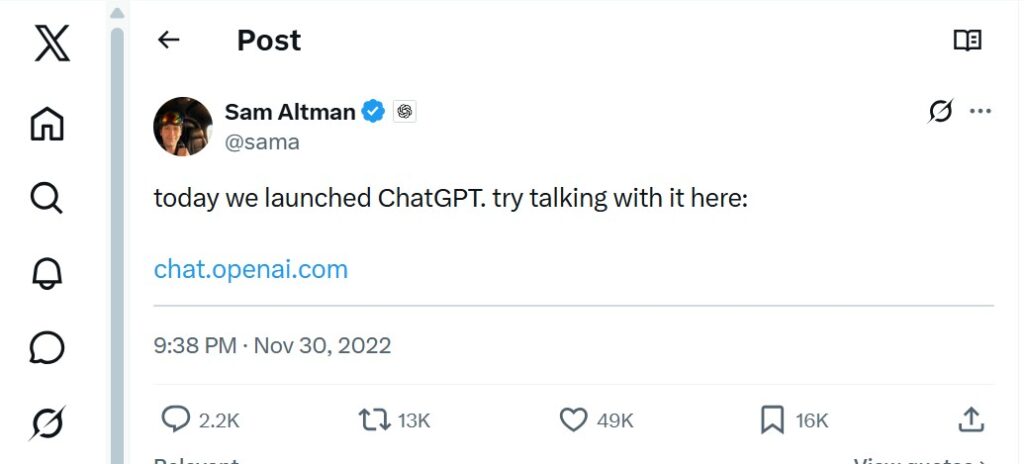
Here is where most entrepreneurs secretly hope to be excused from the work. They hope the innovation will do the marketing. And sometimes it does. Sam Altman tweeted that ChatGPT was live, and one hundred million people signed up within two months. Five days to one million. Two months to one hundred million. The fastest adoption of any consumer product in history. That is innovation so acute it becomes its own distribution network.
But be honest with yourself: you are almost certainly not building ChatGPT. You are building something real, useful, and genuinely valuable for a specific set of people. And those people will not find you because your product deserves to be found. They will find you because you built a system that made you findable to them at the right moment, in the right place, in the right language.
Breakthrough Advertising by Eugene Schwartz costs over a hundred dollars and has a cover that looks like it belongs in a library archive. Read it anyway. Schwartz — one of the greatest direct response copywriters in American advertising history — wrote it in 1966, and it has never been surpassed. His most important contribution is the concept of market sophistication: markets move through stages of awareness, and the job of marketing is to meet the market at its current stage of belief, not where you wish it was. His line: “You cannot create desire for a product. You can only take the desires that already exist and channel them toward your product.” This is the book for depth of marketing thinking, and it rewards every rereading.
$100M Offers by Alex Hormozi is the best modern offer-construction book available. Hormozi’s core argument: “The degree to which you can make your product the obvious solution to your prospect’s specific problem is the degree to which price becomes irrelevant.” Most entrepreneurs are trying to win on price. Hormozi teaches you to win on value so overwhelming that saying no feels irrational.
This Is Marketing by Seth Godin reframes the entire discipline at a foundational level. Godin’s central argument — that marketing is not about the largest possible audience, it is about the smallest viable audience served with enough depth that they spread your message for you — is counterintuitive enough that most entrepreneurs resist it on first reading and reference it for the rest of their careers. His line: “Marketing is no longer about the stuff that you make, but about the stories you tell.”
The Manual — The 1-Page Digital Marketing Plan
And now we arrive at the gap none of those books — individually or together — closes completely, or so I keep telling myself!
Here is the best analogy I have.
You want to fix your car. Some books are good at telling you which type of problem your engine might have. Some entrepreneurship books give you inspiring stories about other drivers who fixed their cars under difficult conditions. Some business books hand you a toolbox and wish you good luck. Some marketing books give you fifty case studies of cars fixed by people in Silicon Valley with three mechanics named Chad, a workshop bigger than your apartment, and access to car parts that have never been available in your country.
What you actually want is the complete manual for your specific make and model. With the tools. The sequence. The diagnostic steps. The confidence that even if the engine fails again three months from now, you know how to fix it — and even if you lose the manual and the tools, you have internalised the framework well enough that you can stop at the nearest garage, buy new tools, and fix it from memory.
That is The 1-Page Digital Marketing Plan by me, Simba. Hi 👋
But I want to be more specific than that, because most books about marketing are not this.
Most marketing books are useful the way a documentary about surgery is useful. You learn the names of the medical instruments. You see the process. You come away feeling informed. Then Monday arrives and your sales are still unpredictable and your content is still getting likes from people who never buy, and you are back to wondering whether you are doing something fundamentally wrong or whether this is just how hard it is.
There are books you read and think: good ideas. There are books you enjoy. Then there is a different category — a rarer one — where you put the book down every few pages not because you are bored but because your mind is already running ahead. You are already seeing the marketing campaign. You are already writing the content in your head. You are already repositioning the offer. You already can see why you need to change the landing page. Or change the price. Or tweak the copy. You put the book down because the ideas are arriving faster than you can read. Every framework the author introduces, you immediately see three applications in your own business. You are not absorbing information. You are receiving tools. The frameworks are a gift, handed to you by someone who built them carefully so that you could use them immediately, without a consultant to explain them and without a course to contextualise them.
That is what The 1-Page Digital Marketing Plan is. At least I sincerely hope this is what it will do. I use the frameworks myself, and use them when doing consulting work.
The book is built as a five-part customer creation system. Customer Ikigai is the intelligence layer — the deep mapping of your customer’s real Problems, their private Passions, the specific Places on the internet where they already live, and the Perceptions they carry about businesses like yours before they ever encounter your name. Simba’s Five Forces is the map of the attention landscape — the platforms, algorithms, content substitutes, and competitive forces that control access to the human you are trying to reach. Content/Market Fit is the test for whether your message is landing with the right people in the right way. Internet Presence Optimisation (IPO) is the doctrine for being discoverable across every surface your customer uses to search, discover, and decide. And Simba’s Content Matrix is the measurement system that tells you what to scale, what to fix, what to protect, and what to delete.
This is not theory. You can buy the book today, or on a Friday, read it over the weekend, and by Monday morning you have a working plan to grow your business. I guarantee this!
Now let me address every objection you are currently holding, because I know they are there.
If you are thinking you do not have time to read: this is a one-page digital marketing plan. The word one-page is not a marketing metaphor. You can complete the entire book in a single sitting.
If you are thinking you already know marketing: I want to ask you one question. Is your revenue predictable right now? Not good some months and silent the next. Predictable. If it is not, you do not yet have a marketing system. You have marketing activity. This book builds the system.
If you are thinking you already have an agency: an agency you cannot interrogate with your own framework is an agency optimising for their reporting metrics, not your conversion numbers. This book gives you the framework that makes every agency, every contractor, and every AI tool accountable to a result that actually matters to your business.
If you are thinking you will figure it out as you go: you are right that you will eventually figure it out. The question is whether you can afford the tuition cost of trial and error in 2026, when the wave of newly displaced workers entering your market is larger than at any point in modern history, when digital advertising costs more than ever, and when your customer’s attention is harder to earn and faster to lose than it has ever been.
Now here is the dimension that changes the entire value proposition in 2026, and it is the thing most people miss entirely.
Every AI tool you currently use — every content generator, every ad creative tool, every agent — is only as powerful as the intelligence you feed it. AI trained on vague customer understanding produces generic output. Average blog posts for an average customer that no one has defined precisely. Average ad creative aimed at a category rather than a person. Average email sequences that sound like they were written by someone who once met an entrepreneur.
Now imagine an AI armed with a detailed Customer Ikigai. Not demographics. Not a buyer persona with a stock photo and a made-up name. A deep map of your customer’s specific 2am fears, the passion that overrides their financial logic, the exact digital communities they inhabit before they start searching for what you sell, and the perception they carry toward businesses like yours before they read a single word you have written.
Give that map to an AI, and what you get back is content that feels like it was written specifically for the person reading it. Blog posts that stop people mid-scroll. Email subject lines that get opened at 11pm because they name something the reader has been thinking about all day. Ad creative that converts not because it is loud but because it is precise. The 1-Page Digital Marketing Plan gives AI the steering wheel it currently lacks in almost every small business marketing workflow.
Imagine an AI agent built on Simba’s Five Forces continuously monitoring your competitive landscape — watching the platforms shift, the algorithms change, the new substitutes entering your customer’s attention space — and telling you how to adjust before the shift costs you. Imagine AI that tracks your Content/Market Fit in real time, telling you which messages are creating replies, saves, clicks, purchases, referrals, and which are evaporating into the feed. Imagine being genuinely present across every surface your customer uses to search — Google, YouTube, Reddit, TikTok, LinkedIn, ChatGPT, Perplexity, WhatsApp, community newsletters, podcasts — not because you are posting everywhere randomly but because you have a system that tells you where your specific customer is looking for what you solve.
The book is AI-proof because it is built on customer understanding, which no model can generate for your specific customer in your specific market. It is AI-ready because every framework in it can be handed to an AI agent that executes it while you sleep.
That line — the system that makes you money while you sleep — is not a cliché in this context. It is the specific architecture this book builds. Atomic Habits by James Clear proved that you do not rise to the level of your goals; you fall to the level of your systems. The 1-Page Digital Marketing Plan is the customer creation system that the rest of your ambition needs underneath it.
The Right Book for the Right Stage of the Fight
The entrepreneur reading this is somewhere specific on the journey. Here is how to use this library depending on where you are standing.
If you are just starting out and the blank page feels overwhelming, begin with Think and Grow Rich to fix the desire, The Mom Test before you build a single thing, and The 1-Page Digital Marketing Plan so that by the time you have a product, you already know who you are selling it to and exactly how you will reach them.
If you are overwhelmed — doing everything but gaining no consistent traction — begin with The War of Art to name the Resistance that is keeping you from your most important work, The ONE Thing by Gary Keller and Jay Papasan to identify the single move that matters most, and The 1-Page Digital Marketing Plan to replace scattered activity with a working system.
If you have a good product but cannot convert it into reliable sales, begin with Obviously Awesome to fix your positioning, $100M Offers to sharpen what you are actually selling, and The 1-Page Digital Marketing Plan to build the distribution and conversion infrastructure around the newly positioned offer.
If you are successful but operating below your potential — revenue has plateaued, growth has stalled, and the next move is not obvious — begin with Good Strategy Bad Strategy to separate what you are doing from what you should be doing, Competing Against Luck to understand the real job your customer is hiring you to do, and The 1-Page Digital Marketing Plan to rebuild your customer creation engine for the next stage of growth.
I want to be honest about something before I finish. The success of The 1-Page Digital Marketing Plan will not be measured by how many copies it sells or whether it goes viral or whether it reaches a bestseller list. Those are the wrong metrics for what this book is trying to do.
It will be measured by whether the entrepreneurs who read it create content that creates customers for their businesses each and every single day for many years to come. Whether they go from invisible to trusted. Whether the founder in Tokyo builds the client base she deserves. Whether the business owner in New Jersey stops guessing and starts converting. Whether the entrepreneur in Manchester who has been burning through ad budgets without results finally understands why — and fixes it.
If those entrepreneurs win, the book wins. There will be more books, more tech, more content, more tools. But the frameworks in this book — they are not products. They are tools in the sense that Tim Ferriss meant when he wrote Tools of Titans: instruments that were forged by someone else’s experience so that you do not have to reinvent them from raw metal.
Read widely. Let Hill give you the desire. Let Allen sharpen your discipline. Let Pressfield name the Resistance that is costing you. Let Fitzpatrick teach you to listen to customers honestly. Let Weinberg and Mares give you the traction map. Let Michalowicz fix your cash flow. Let Housel teach you to think about money across a lifetime. Let Voss teach you to negotiate without losing the relationship. Let Christensen show you the real job. Let Dunford position your business correctly for the first time. Let Schwartz show you what marketing thinking looks like at full depth.
But when Friday arrives, and you want one book you can read over the weekend and deploy on Monday in the market where your customer actually lives — the internet, in 2026, with AI tools in one hand and a customer who is more distracted, more distrustful, and more contested than at any previous moment in history in the other — the answer is not complicated.
Buy The 1-Page Digital Marketing Plan. Read it this weekend. Put it down every few pages because your mind is already running ahead with ideas.
Then execute on Monday.
Your Next Move
If you felt something reading this — not inspiration, but recognition, the specific feeling of someone naming a gap you have been trying to close — do not add this to a list. Do not screenshot it. Do not share it with a plan to come back. Go now: 1-pagedigitalmarketingplan.com. Buy it today. Read it this weekend. The plan you build from it will cost you less than your last failed ad campaign.
If you are still building your case, that is fine. Come spend time in the thinking first. The Millionaires Podcast, Millionaires TV, the social profiles — they are there for the curious. Stay close. Because sooner or later, every serious entrepreneur arrives at the same place.
The place where more tools, more content, more motivation, and more AI prompts are not the answer.
The business needs customers. The map is one page. The weekend starts NOW!