
Somewhere, right now, the world’s greatest salesman is working.
24/7. Non-stop.
A beast of a man.
Not preparing.
Not warming up.
Not saying some affirmations in the mirror.
Not checking his calendar.
Not waiting for the economy to improve.
Not waiting the Ukraine-Russia war to end.
Not waiting for all the other world conflicts to end.
Not waiting for the price of gas to go down.
Just working.
He is awake while you sleep.
He is awake while your staff sleep.
He is awake while your sales team sleeps.
He is awake while your marketing agency is closed for the weekend, while your competitor is in an emergency meeting, while your customer is alone at 1:17am searching for the exact problem your business solves.
He does not ask for a sales commission.
He does not need a bonus.
He does not complain about the quality of the leads.
He does not say the market is saturated.
He does not ask for a raise after one good month.
He does not get bored.
He does not lose motivation.
He does not change jobs.
He does not go quiet because you hurt his feelings.
He does not need coffee, confidence, a ring light, a CRM, a sales script, or a manager named Brad telling him to “smile more on the calls.”
He just sells.
He is a sales machine.
Quietly.
Patiently.
Faithfully.
Every day.
Every night.
On every continent.
In every time zone.
At the exact moment the customer needs him.
If a worried entrepreneur in New York searches, “how do I get more customers without wasting money on ads?” — he is there.
If a dentist in Birmingham searches, “how do I get more patients from Google?” — he is there.
If a mother in Sydney searches, “best baby monitor for small apartment” — he is there.
If a founder in Singapore searches, “why does my content get views but no sales?” — he is there.
If someone in Hong Kong types, “best business book for entrepreneurs in 2026” — he is there.
Not chasing.
Not begging.
Not interrupting.
Waiting.
Patiently waiting.
Like a loyal dog at the train station.
Like a hobbit carrying the ring through storms, swamps, monsters, darkness, boredom, doubt, and the endless stupidity of bigger men who think they are the heroes of the story.
Small.
Faithful.
Unimpressive at first glance.
Impossible to stop once the mission is clear.
That is the world’s greatest salesman.
And here is the secret.
He is not a man.
He is not human.
He is content.
A blog post.
A 5-star review.
A guide.
A video.
A comparison page.
A podcast episode.
A white paper.
A case study.
A book chapter.
A landing page.
A YouTube explainer.
A Reddit answer.
A TikTok.
A checklist.
A buyer’s guide.
A story.
A framework.
A page on the internet that keeps showing up when the customer has a problem and needs a solution.
Og Mandino wrote The Greatest Salesman in the World, and if you have read it, you understand why the title feels sacred. The book is not really about sales tricks and hacks. It is about discipline, belief, persistence, repetition, service, and the inner transformation required to become the kind of person who can sell with conviction – its about becoming a friend to a stranger, earn their trust, and be helpful to them by selling them something.
But the question that inspired this essay is bigger.
Lets imagine for one moment,
If you became the world’s greatest salesman, how would you multiply yourself?
How would you be in London and New York at the same time – without begging British Airways to bring back the concorde?
How would you sell while you sleep?
How would you speak to one customer at midnight, another at breakfast, another six months from now, another ten years from now, another 100-years from now and another after you are dead and gone?
How would you serve every continent without needing a diplomatic passport?
How would you keep selling after your voice is tired, after your body is gone, after the market has changed, after the platforms have shifted, after new technology comes after AI, after a new generation discovers the same old human problems wearing new clothes?
That – that is what digital marketing really is.
Digital marketing is the multiplication of the salesman on the internet.
Peter Drucker gave business its timeless truth: the purpose of a business is to innovate and create a customer.
Not to be busy.
Not to win awards.
Not to impress other entrepreneurs.
Not to generate impressions.
Simply, to innovate and to create a customer.
A customer is not created when someone sees you.
A customer is not created when someone likes you.
A customer is not created when someone says, “Great post.” Or “A Certified Banger!”
A customer is created when a human being on the internet, moves from stranger to believer to buyer.
That is the work of marketing.
Traditional marketing created customers through television, radio, newspapers, direct mail, billboards, catalogs, events, sponsorships, and sales letters.
Digital marketing creates customers on the internet.
And what does the internet run on?
CONTENT.
Lots and lots of content.
That is the bridge most entrepreneurs miss.
Digital marketing is not “being online.”
Digital marketing is not having a website.
Digital marketing is not paying for ads.
Digital marketing is creating customers on the internet using content.
That content may be an ad.
It may be a video.
It may be a podcast.
It may be a PDF.
It may be a white paper.
It may be a case study.
It may be a tweet.
It may be a book summary.
It may be a blog post.
It may be a landing page.
It may be an email.
It may be an Amazon review.
It may be a YouTube comparison.
It may be a Reddit answer.
All of it is content.
All of it is a potential salesman who works 24/7 without pay.
But here is the dangerous part.
All content is equal.
But some content is more equal than others.
That is one of the brutal lessons of Simba’s Five Forces. That is why some of you remain invisible on the internet, and end up believing in conspiracy theories!
The internet is not a fair library where every useful thing gets discovered by a noble customer in spectacles.
Gary Vaynerchuk called the internet – a battleground for attention.
Not a circus. Not some show. Not a stage you climb for your 15-minutes of fame.
The internet is a war zone for attention.
Some content gets buried by the flood.
Some content gets substituted by easier digestible formats.
Some content loses to entertainment.
Some content is strangled by platforms and algorithms before it sees the light of the newsfeed.
Some content is rejected by the audience before it gets a second chance.
So yes, all content can be a salesman.
But most content is a terrible salesman.
Most content is lazy.
Most content is confused.
Most content is obsessed with attention instead of customers.
Most content works for Miss Attention, not for your business.
You need to understand Miss Attention.
In investing, Benjamin Graham gave us Mr. Market: the unstable, emotional figure who knocks on your door every day offering prices based on his mood. Sometimes euphoric. Sometimes terrified. Sometimes irrational. The wise investor learns not to be ruled by him.
On the internet, we have his more seductive cousin.
Miss Attention.
Beautiful on the outside.
Desperately wicked on the inside.
A witch in designer Gucci clothing.
A mistress of dopamine.
A deadly siren with a ring light.
She smiles at entrepreneurs and businesses and says:
“Come here, darling. I can make you go viral.”
And they follow her.
Of course they follow her.
She is irresistible.
She offers millions of views.
Millions of likes.
Millions of shares.
Millions of comments.
Millions of followers.
All within a few seconds.
And what do you get?
Charts that rise.
Screenshots that impress.
The warm narcotic glow of being noticed on the internet.
It’s as if you have finally arrived.
But Miss Attention destroys more businesses than she builds.
Because she rewards the thing that catches the eye, not necessarily the thing that creates the customer.
She makes fools feel famous for 15-minutes.
She makes noise look like progress.
She makes applause feel like pending revenue.
She makes a founder with 100,000 views and zero sales think they are “building brand awareness.”
She is beautiful.
She is poisonous.
And most businesses keep hiring salesmen who are secretly in love with her. Obsessed with her. Infatuated by her.
They hire ads that chase clicks.
They hire trends that chase relevance.
They hire influencers who chase themselves.
They hire marketing agencies that chase reports.
They hire content creators who chase views.
They hire virality, the worst lover of all, who arrives with fireworks, leaves with your dignity, and sends no customers.
That is why the world’s greatest salesman cannot be obsessed with Miss Attention.
He must respect attention, but he must serve the customer.
He must know that attention is only the door.
The customer is the destination.
A salesman who gets attention but creates no customer is not a salesman.
He is a Disney mascot wearing a name badge.
Now look at Amazon.
Really look.
Because Amazon is not just a company.
Amazon is a crime scene for every lazy theory about business success.
Who really knows what made Amazon successful?
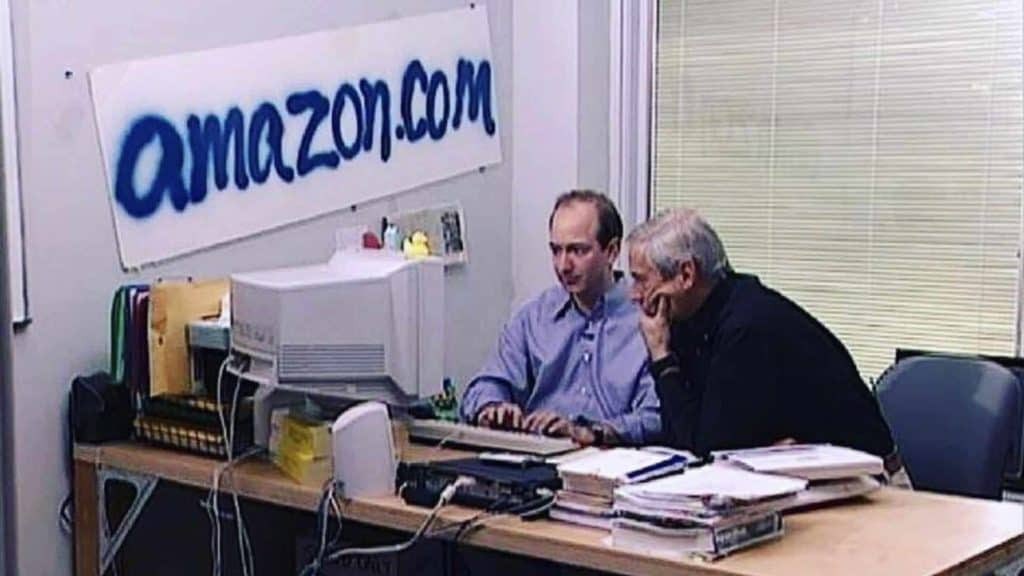
C’mon, how does an investment banker leave a comfortable Wall Street job, start by selling books on the internet in his garage, and end up building one of the most valuable companies in human history?
How does a business with no traditional physical store become the default store inside every human brain in America and the world?
How does a company that started selling books become the place people go for batteries, baby wipes, laptops, dog food, protein powder, garden hoses, birthday gifts, toilet paper, and that strange little cable nobody knows the name of but somehow needs by tomorrow?
The obvious answers are true but incomplete.
Selection mattered.
Convenience mattered.
Amazon Prime mattered.
One-click mattered.
Warehouses mattered.
Data mattered.
Customer obsession mattered.
But beneath all of that, Amazon did something almost biblical.
Something not known until now.
It has to do with an unknown legend called Eric ‘Link Moses’ Ward – the guy, who could take any business to the promised land of untold millions of traffic on the internet.
He built roads.
Not roads of concrete.
Roads of content that all ended at Amazon’s gates.
In 1996, with the help of the ‘Link Moses’ Amazon launched Amazon Associates.
The idea was so simple it almost disappears in its own brilliance: let other people recommend products, send traffic to Amazon, and earn a commission when purchases happen.
Amazon did not force the internet to sell for it.
It incentivized the internet to sell for it.
That is a completely different kind of marketing genius.
A normal company says, “We need more ads.”
Amazon said, “What if every blogger on the internet could become a salesman for us?”
A normal company says, “We need a bigger sales team.”
Amazon said, “What if the internet became THE sales team?”
A normal company says, “We need to create more content.”
Amazon said, “What if millions of other people created content that pointed straight to us?”
Book reviews.
Camera reviews.
Phone reviews.
Toy reviews.
Laptop comparisons.
Gift guides.
Kitchen gadget rankings.
“Best books for entrepreneurs.”
“Best headphones for working from home.”
“Best microphone for YouTube.”
“Best standing desk.”
“Best Kindle books.”
“Best business books.”
“Best of everything.”
And where did the links point?
Amazon.
Again and again and again.
Every review became a road.
Every ranking became a road.
Every product comparison became a road.
Every YouTube description became a road.
Every blog post became a little hobbit walking through the wilderness carrying a link back to the kingdom.
Faithful.
Quiet.
Useful.
Commercially lethal.
And this is why Amazon became more than a store.
Amazon became the destination behind the answer.
The customer searched for advice.
The internet gave them content.
The content gave them confidence.
The confidence sent them to Amazon.
That is the architecture of modern commerce.
Not interruption.
Direction.
Not shouting.
Being the place every road leads.
Now, let me ask you the uncomfortable question.
If Amazon stopped advertising tomorrow, would Amazon vanish?
NO!
The army would remain.
Millions of reviews would remain.
Millions of videos would remain.
Millions of blog posts would remain.
Millions of affiliate links would remain.
Millions of recommendations would remain.
The salesmen would keep on selling.
Some would be old.
Some would be ugly.
Some would have screenshots from a version of the internet that looks like it was designed during a South African power cut.
But they would still work.
Because a loyal salesman does not need to be fashionable.
He needs to be useful at the moment of need.
That is the first lesson.
Most businesses hire the wrong salesmen.
They hire ads.
Ads are not loyal.
Ads are like mercenary soldiers.
They fight only while you pay them.
The moment the budget stops, they put down the AK-47 and walk away.
They do not remember you.
They do not miss you.
They do not care that payroll is due on Friday.
They served the highest bidder yesterday, they serve you today, and tomorrow they will serve your competitor with the same dead expression.
Ads can work.
Mercenaries can win battles.
But you should never confuse a mercenary with a kingdom.
Then, businesses hire trends.
Trends are charming, fast, and completely unreliable.
They arrive at the party with bright clothes, loud music, and the confidence of someone who knows everybody will look at them for six minutes.
Then they leave.
Yesterday it was a dance.
Today it is a sound.
Tomorrow it is a format.
Next week it is embarrassing.
Trends can give you attention.
But trends do not build loyalty.
They are tourists in your business.
Then businesses hire virality.
Virality is the most seductive salesman of all because he is Miss Attention’s favorite doormat.
He knows how to hype you up.
He knows how to make the room scream.
He knows how to get applause, millions of views, comments, shares, and screenshots.
He walks in wearing sunglasses indoors and promises he can make you famous.
Sometimes he does.
Then you check the dashboard. Then the bank account.
No customers.
No sales.
No pipeline.
No repeatable system.
Just the strange emotional hangover of being seen by people who had no intention of buying from you.
Virality is not always useless.
But virality without customer creation is applause in a room you do not own.
Then, businesses hire marketing agencies.
Some are excellent.
Many are slide factories with Wi-Fi.
They send marketing reports with arrows pointing upward and words like “reach,” “awareness,” “engagement,” and “brand lift.”
They show you movement.
They show you impressions.
They show you charts. Beautiful charts.
But the only question that matters is the one most reports avoid like a Twilight vampire avoids the sunlight:
How many customers did this create?
Because marketing is not the act of making noise.
Marketing is the act of creating customers.
Then, businesses hire random content.
This is the most common mistake.
They hire content as if content is one thing.
It is not.
A TikTok that gets attention but creates no customer is content.
A white paper that makes a CFO trust you is content.
A podcast that builds authority for three years is content.
An ad that turns strangers into buyers is content.
A blog post that ranks for a buying question is content.
A YouTube review that sends people to your product every day is content.
A comparison page that removes doubt is content.
A book that changes how an entrepreneur sees their business is content.
All content is equal.
But some content is more equal than others.
The difference is not the format.
The difference is the job.
Does it create a customer?
Does it move a human being from confusion to clarity?
Does it make the buyer feel understood?
Does it remove a reason not to buy?
Does it appear where the customer actually searches?
Does it keep working after the day it was published?
Does it build the brand brick by brick?
Does it sell without looking like it is selling?
That is the content you want to hire.
That is the world’s greatest salesman.
Now think about Apple.
Do you really buy the Apple iPhone because of one ad?
Maybe the ad creates theatre.
But the sale is bigger than the ad.
The salesforce, the content is the army.
The Apple keynote from Cupertino.
The reviews.
The unboxing videos on YouTube.
The camera tests.
The comparisons.
The Reddit debates.
The YouTube creators.
The TikTok videos.
The memes about using your kidney as a payment option for the new iPhone.
The friend who says, “Just get the iPhone.”
The iPhone that turns up in one of your favourite movies. Or Netflix show.
The status.
The ecosystem.
The blue bubbles.
The customer stories.
The product pages.
The memory of the last iPhone.
The cultural proof.
The thousand little salesmen surrounding the product until buying it feels less like a decision and more like joining the obvious future.
Apple’s greatest salesman is not an ad.
It is the surrounding atmosphere of belief.
Now think about the book Think and Grow Rich.
Chances are, if I have done my research well, used the Customer Ikigai very well, you have read this book, not once, not twice, but several times. You read the book like making a pilgrimage.
Napoleon Hill wrote Think and Grow Rich in 1937.
Before the internet.
Before social media.
Before Amazon.
Before podcasts.
Before YouTube summaries.
Before affiliate links.
Before TikTok creators in rented apartments telling you that your mindset is the only thing standing between you and a Lamborghini.
The author is dead. He has been dead for decades.
Some people say he died broke.
The world he wrote for is gone.
The economy changed.
Technology changed.
Attention changed.
The reader changed.
And yet the book still sells!
WHY?
Nearly a century later, it still walks into conversations like it has a master key.
Entrepreneurs mention it.
Coaches mention it.
Motivational speakers cannot stop singing about it.
YouTubers mention it.
Millionaires mention it.
People who are not millionaires mention it with even more confidence.
It appears in lists.
It appears in videos.
It appears in podcasts.
It appears in “books that changed my life.”
It appears in quotes.
It appears in summaries.
It appears in arguments.
It appears in airport bookshops, online libraries, Audible queues, Kindle recommendations, and the mental furniture of business culture.
Who is selling it?
Not Napoleon Hill.
He is long gone.
But the ever loyal salesman, the content still sells the book.
The audiobook on YouTube is content.
The quotes on Instagram are content.
The summaries are content.
The YouTube videos are content.
The podcast mentions are content.
The reviews are content.
The idea is content.
Desire.
Faith.
Persistence.
The definite chief aim.
The promise that poverty is not destiny.
The belief that a person can think, plan, and persist their way into another life.
That salesman is loyal to a dead author.
Like a dog that keeps waiting at the station for its owner to return someday.
Like a hobbit that never asks whether the king remembers his name.
Like a virus that survives by adapting to every new host.
Hardcover.
Paperback.
Audiobook.
PDF.
Quote card.
Seminar.
YouTube summary.
TikTok clip.
Podcast mention.
Newsletter.
Reddit recommendation.
Amazon review.
AI summary.
The salesman changes clothes.
But the mission continues. As long as someone somewhere comes onto the internet and they want to change their mindset and become rich – the salesman, as content, appears in time. Never too early, never late. But just in time.
That is the power of content when it becomes evergreen.
It can outlive the creator.
It can cross borders the creator never visits.
It can speak in rooms the creator never enters.
It can sell while the creator is sick, asleep, retired, broke, rich, famous, forgotten, or dead.
This is what every entrepreneur secretly wants.
Not just sales.
A sales force that compounds.
A brand that keeps speaking.
A business that keeps being discovered.
A message that keeps finding the right person at the right moment on the internet.
A little army of loyal hobbits walking across the internet carrying value, proof, trust, story, and direction back to the business.
And now, because of the internet and AI, this is no longer reserved for Amazon, Apple, Nike, HubSpot, or the giants.
You can build this.
Not someday.
Not after you have a 20-person marketing team.
Not after getting millions of funding.
Not after hiring an agency that uses the word “omnichannel” like a smoke bomb.
You can begin by Monday.
But only if you stop trying to hire the wrong salesmen.
Stop hiring only ads.
They leave when the money leaves.
Stop hiring only trends.
They move on when the crowd moves on.
Stop hiring only virality and build an altar to Miss Attention.
It can make you famous and still leave you broke.
Stop hiring only random content.
Most content is just an unpaid intern wandering the internet with no instructions.
You need a system for forging the world’s greatest sales force on the internet.
That means your content must know who it serves.
Your content must know what problem it solves.
Your content must know where the customer searches.
Your content must know what the customer already believes.
Your content must know what the customer distrusts.
Your content must know what must happen next.
Your content must know whether its job is to attract, educate, compare, reassure, convert, retain, or evangelize.
Your content must stop flirting with Miss Attention and start creating customers.
This is where The 1-Page Digital Marketing Plan enters quietly.
Not as another marketing book shouting from the shelf.
As the blacksmith’s forge.
The book gives you the frameworks to forge your internet sales force.
Customer Ikigai teaches every salesman who the customer is: their problems, passions, places, and perceptions.
Simba’s Five Forces teaches every salesman the battlefield: the flood of content, substitute formats, cognitive rivalry, platform power, and the audience’s judgment.
Content/Market Fit teaches every salesman to stop performing and start creating customers.
Internet Presence Optimization (IPO) teaches you where to station your salesmen: every digital surface where the customer searches, scrolls, asks, compares, and decides.
Simba’s Content Matrix teaches you which salesmen to scale, which to fix, which to protect, and which to fire.
That is the missing marketing system.
Most entrepreneurs do not have a sales force.
They have scattered posts across the internet
Occasional Google and Meta ads.
Abandoned blogs.
Half-finished lead magnets.
Videos with no path to purchase.
PDFs nobody opens.
Emails nobody remembers.
Content that entertains strangers and starves the business of cash flows.
The book turns that mess into a Sales army.
One page.
Five frameworks.
A customer-creation system.
By Monday, an entrepreneur can begin building the first loyal salesman.
One permanent customer problem.
One clear piece of content.
One place where the customer already searches.
One answer better than the competition.
One path from attention to trust to sale.
Then the next.
Then the next.
Brick by brick.
Piece by piece.
Sale by sale.
This is how brands are built now.
Not only with marketing campaigns.
But with compounding content.
Not only with ads.
With internet salesmen.
Not only with attention.
With trust that keeps renewing itself.
And AI makes this more powerful, not less.
AI can help create content.
AI can turn one essay into ten into 100 posts.
AI can help analyze customer language.
AI can help repurpose a video into clips, emails, posts, scripts, summaries, and landing page sections.
AI agents will soon search, compare, recommend, and buy on behalf of humans.
Which means the businesses with the clearest, most useful, most findable, most trusted content will not only be found by people.
They will be found by the AI Agents helping people decide.
The salesman is evolving again.
From book to blog.
From blog to video.
From video to AI answer.
From AI answer to recommendation.
From recommendation to sale.
The hobbit has learned to ride a dragon.
But the mission is the same.
Help the customer.
Create trust.
Make the path clear.
Move them toward the solution.
Create the customer.
This is the real secret.
The world’s greatest salesman is not the loudest.
He is the most useful at the exact moment of need.
He does not manipulate.
He clarifies.
He does not chase.
He appears.
He does not beg.
He serves.
He does not die when the campaign ends.
He keeps walking.
Amazon understood this.
Apple benefits from this to this day.
Think and Grow Rich sales numbers proves this.
And the entrepreneur who understands it now has the closest thing modern business offers to magic:
A sales force at their fingertips.
A tireless army of content.
Each piece carrying the brand.
Each piece teaching the customer.
Each piece removing doubt.
Each piece creating trust.
Each piece making the next sale more likely.
The world’s greatest salesman is waiting to be forged.
Not with salary.
With strategy.
Not with commission.
With clarity.
Not by chance.
By a system.
Build him.
Multiply him.
Send him everywhere your customer goes.
And while others keep renting mercenaries, chasing trends, worshipping Miss Attention, and praying for virality, your loyal little hobbits will keep walking through the dark, carrying your business forward.
One useful answer at a time.
One customer at a time.
One sale at a time.